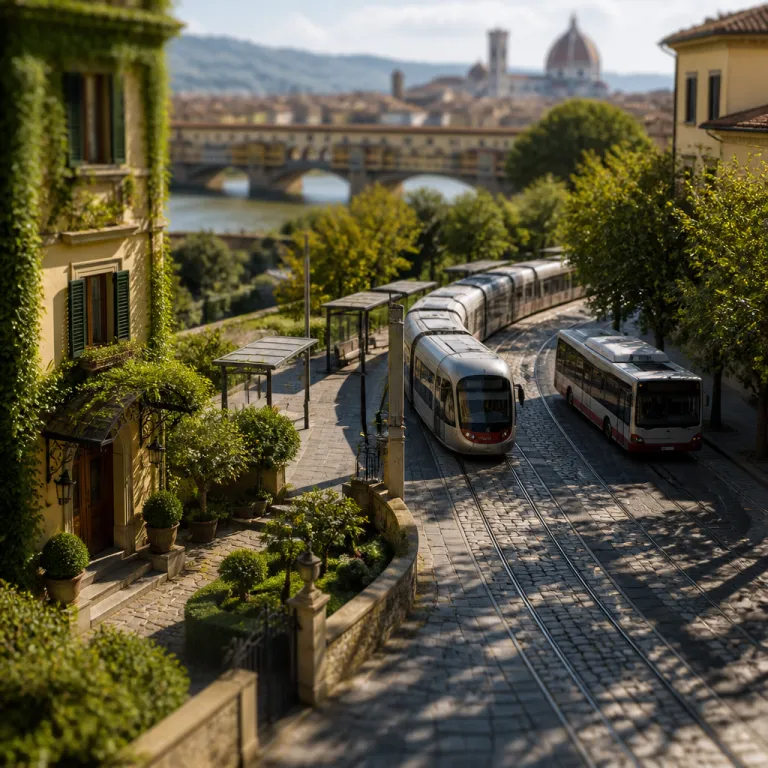
Understanding public transport in Florence Italy from a hotel guest’s perspective
Florence feels compact at first glance, yet public transport in Florence Italy quickly becomes essential once you start planning museum times and dinner reservations. The city has a dense network of bus and tram services that link the historic center with residential districts, the train station, and the airport, which means your hotel choice will shape how easily you move around. For most Florence travel plans, combining walking through the historic center with a few well chosen bus or tram rides will keep your days efficient and your feet grateful.
At the heart of this system stands Autolinee Toscane, the company that operates almost all Florence bus lines and the modern trams that glide into the city center. When you check in, ask reception for the latest paper map Florence or a QR code that opens the official app, because routes and timetables can change with roadworks or events. Many hotels near Santa Maria Novella train station keep updated paper tickets at the desk and can explain which buses Florence residents actually use to reach the Uffizi, Piazzale Michelangelo, or the Oltrarno hills for a panoramic view Florence at sunset.
Most visitors focus on the historic center, yet understanding how buses, trams, and the main interchange stops work will expand your options for quieter hotels. A property just beyond Fortezza da Basso or near a tram stop on the T1 or T2 lines can offer better value while keeping you ten minutes from Piazza del Duomo by public transport. When you evaluate any Florence hotel, look at its walking distance to a tram stop or major bus routes on a reliable map and you will immediately see how your daily logistics will feel.
Key hubs: santa maria novella, tram lines, and the city center
Santa Maria Novella train station is the main gateway for public transport in Florence Italy and a crucial reference point when you book a room. From this transport hub, the T1 tram runs towards Scandicci and the Careggi hospital area, while the T2 tram links the station with the airport in around twenty minutes, which makes it ideal for early flights. Many Florence bus lines also start or pass near the station, so staying within a ten minute walk of Santa Maria Novella gives you fast access to buses Florence residents rely on daily.
The area between the train station, Fortezza da Basso, and the historic center forms a triangle that hotel guests should study carefully on a map Florence before confirming a reservation. Fortezza da Basso hosts major trade fairs and events, and during those periods bus routes and trams can feel crowded at peak times, which may influence whether you prefer a quieter street or a hotel right on the main transport corridor. If you plan several day trips by rail, such as to Pisa or Lucca, a hotel close to Santa Maria Novella will reduce transfer stress and allow you to return by tram or bus even late in the evening after dinner.
When you look at Florence travel blogs or hotel websites, check how clearly they explain access to the city center by public transport and whether they mention specific tram stops or bus numbers. A property that simply says “close to the center” without naming the nearest tram line, bus stop, or walking time from the train station is leaving you to guess, which is rarely ideal for a short stay. For more ideas on extending your stay beyond the city, you can read this guide on planning effortless day trips from Florence to the Tuscan countryside, then match those plans with hotels that offer easy tram or bus access back to Santa Maria Novella.
Tickets, apps, and how to pay for buses and trams
Understanding how tickets work for public transport in Florence Italy will save you both time and small frustrations at the start of your trip. Autolinee Toscane has moved strongly towards digital options, yet paper tickets still exist and remain useful for some visitors who prefer a physical ticket. You can buy a single bus or tram ticket at newsstands, tabacchi shops, some hotel receptions, and ticket machines at major tram stops, then validate it as soon as you board.
The official Autolinee Toscane app lets you purchase tickets, check routes, and view real time data about arrivals, which is especially helpful if you are staying outside the historic center. Within the app you can store a digital ticket, see a live map of buses and trams, and plan a journey from your hotel to any piazza or museum with a few taps. Many visitors now simply pay with a contactless credit card directly on the tram or on selected Florence bus lines, but you should always check the current rules and the operator’s privacy policy before storing card details in any app.
Paper tickets still have a role, especially if your phone battery runs low or you prefer not to share personal data through an app while travelling. Some hotels keep a small stock of paper tickets at reception, and a good concierge will explain whether a day pass or multiple single tickets will suit your Florence travel style. When you compare hotels, ask whether staff can help you install the app, read the map, and choose the right ticket type, because that small support can transform your first day in the city.
Choosing a hotel location around key piazzas and routes
Where you sleep in Florence shapes how you use public transport and how much of the city you can comfortably reach each day. Hotels around Piazza Santa Maria Novella, Piazza San Marco, and Piazza della Signoria all sit within the historic center, yet each area connects differently to bus and tram routes. A property near Piazza Santa Maria Novella offers immediate access to the train station, trams, and many buses, while Piazza San Marco is better for quick bus links to Fiesole and the university district.
When you study a map Florence before booking, trace the routes from your preferred hotel to the Duomo, the Uffizi, and the Oltrarno, then note which bus tram combinations appear most efficient. Some streets in the city center are pedestrian only or restricted to residents, which means taxis and buses must follow longer loops, so a short walk to a tram stop can sometimes be faster than a direct bus. If you want a room with a classic view Florence over red rooftops and church domes, you might stay slightly uphill in areas served by buses Florence uses less frequently, so reliable timetables and clear ticket options become even more important.
Concierge teams in well run Florence hotels now treat public transport advice as part of their core service, alongside restaurant reservations and museum bookings. Many can arrange personalized city tours that start right from your lobby, then weave tram rides and short bus hops into the itinerary so you experience the city as locals do. For guests who prefer guided experiences in English, it is worth reading this article on how to choose a hotel for Florence guided tours and then checking how easily those tours connect with nearby bus and tram stops.
Personalized city tours and concierge services built around public transport
Some of the most rewarding experiences in Florence come from personalized city tours that use public transport intelligently rather than relying only on private cars. A skilled concierge will design a route that starts in the city center, uses a tram from Santa Maria Novella to reach a lesser known district, then returns by bus through a different neighborhood so you gain a layered view of daily life. This approach keeps costs reasonable, reduces traffic in the historic center, and often reveals cafés, markets, and artisan workshops that many visitors never see.
Imagine a morning where you leave your hotel near Piazza Santa Maria Novella, take a tram towards Fortezza da Basso, then switch to a Florence bus that climbs towards Fiesole for a sweeping view Florence from above. Your guide can explain how the buses and trams network has reshaped commuting patterns in the city, while you watch students, office workers, and families share the same public space. Later, you might return to the city center by a different bus tram combination, stopping at a neighborhood trattoria that your concierge has marked on a printed map with your dietary preferences noted.
For guests concerned about digital privacy, a good hotel team will help you balance the convenience of the Autolinee Toscane app with a clear understanding of its privacy policy and the option to rely on paper tickets instead. They can also store your preferred routes and timing as internal data for future stays, so the next time you arrive they already know whether you like to walk more or lean on public transport. When you evaluate hotels online, look for reviews that mention how staff helped guests navigate buses Florence wide, because that level of personalized support often signals a property that truly understands the rhythm of the city.
Practical itineraries: using buses and trams from morning to night
Planning a full day that combines walking with public transport in Florence Italy will help you see more while avoiding fatigue. Start in the early morning with a short tram ride from your hotel near the train station to the edge of the historic center, then stroll through quieter streets towards the Duomo before crowds build. After visiting the cathedral, you can walk to Piazza della Signoria and the Uffizi, then use a bus from the nearby lungarno to cross the river and reach the Oltrarno district for lunch.
In the afternoon, a bus from the city center can take you towards Piazzale Michelangelo for a famous view Florence over the Arno and the dome of Santa Maria del Fiore. Many visitors choose to walk down through the gardens afterwards, then catch another Florence bus back towards Piazza Santa Maria Novella or Piazza San Marco depending on their hotel location. If you plan to visit several museums in one day, consider reading this guide on why hotel guests should prioritise skip the line tickets, then align your timed entries with tram and bus routes so you arrive calmly rather than rushing.
Evenings lend themselves to a final tram ride or short bus hop back to your hotel, especially if you have chosen a property slightly outside the busiest streets of the historic center. Many guests appreciate how the regular rhythm of buses and trams allows them to dine in one neighborhood, enjoy a gelato in another piazza, then return safely without relying on taxis. When you map out these itineraries in advance, you will see how a well located hotel and a basic understanding of tickets, routes, and payment options can turn Florence into a city that feels both intimate and effortlessly connected.
Key figures on public transport in Florence for hotel guests
- The Florence tram network currently has two main operational lines (T1 and T2) and additional extensions under development, and the existing lines carry tens of millions of passengers each year according to municipal transport reports, which shows how reliable trams have become for both residents and visitors.
- Single urban tickets for buses and trams in Florence typically allow 90 minutes of travel from validation within the city zone, giving hotel guests enough flexibility to change routes once or twice without buying a new ticket for every short hop.
- Contactless payment on trams and selected buses has grown rapidly in recent years, with local authorities reporting a strong shift from paper tickets to digital payments, which means more visitors can simply tap a credit card instead of searching for a tabacchi shop.
- Santa Maria Novella train station handles hundreds of regional and long distance trains every day, and its direct connection to the T1 and T2 tram lines makes it the most strategic area for hotel guests who plan multiple day trips by rail.
- Traffic restriction zones in the historic center cover several square kilometres and are enforced by cameras, which is why public transport and walking remain the most practical ways for hotel guests to move between major sights without risking fines.
FAQ about public transport in Florence Italy for hotel guests
Is it better to stay near the tram or in the historic center ?
Staying in the historic center puts you close to major sights, but hotels near a tram stop, especially around Santa Maria Novella or Fortezza da Basso, offer faster links to the station and airport. If you plan many day trips, a tram side location is often more practical. For a short cultural break focused on museums, a central address with good bus connections can be ideal.
Can I use the same ticket on both buses and trams in Florence ?
Standard urban tickets issued by Autolinee Toscane generally cover both buses and trams within the city zone for a fixed time window, usually around 90 minutes. You validate once and can change from a bus to a tram or between buses during that period. Always check the current conditions printed on the ticket or displayed in the app before travelling.
How do I buy tickets if I arrive late at night at Santa Maria Novella ?
If newsstands and tabacchi shops are closed, you can usually buy tickets from tram ticket machines outside Santa Maria Novella or pay directly with a contactless credit card on the tram itself. Some hotels near the station keep a small stock of tickets for late arrivals, so it is worth asking in advance. Using the official Autolinee Toscane app is another option if your phone has data and you are comfortable with digital payments.
Are buses and trams in Florence safe for solo travellers ?
Buses and trams in Florence are widely used by locals, students, and workers, and they are generally considered safe, especially during the day and early evening. As in any city, keep an eye on your belongings in crowded areas and near major tourist stops. Choosing a hotel near a well lit tram stop or busy bus route can add an extra layer of comfort when returning at night.
Do I need a car if my hotel is outside the city center ?
Most hotels just outside the city center are deliberately located near a tram line or major bus route, so a car is rarely necessary and can even be a burden because of parking costs and restricted zones. Public transport in Florence Italy, combined with walking, usually covers all main needs for sightseeing and dining. If you plan to explore rural Tuscany extensively, consider renting a car only for those specific days rather than for your entire stay.