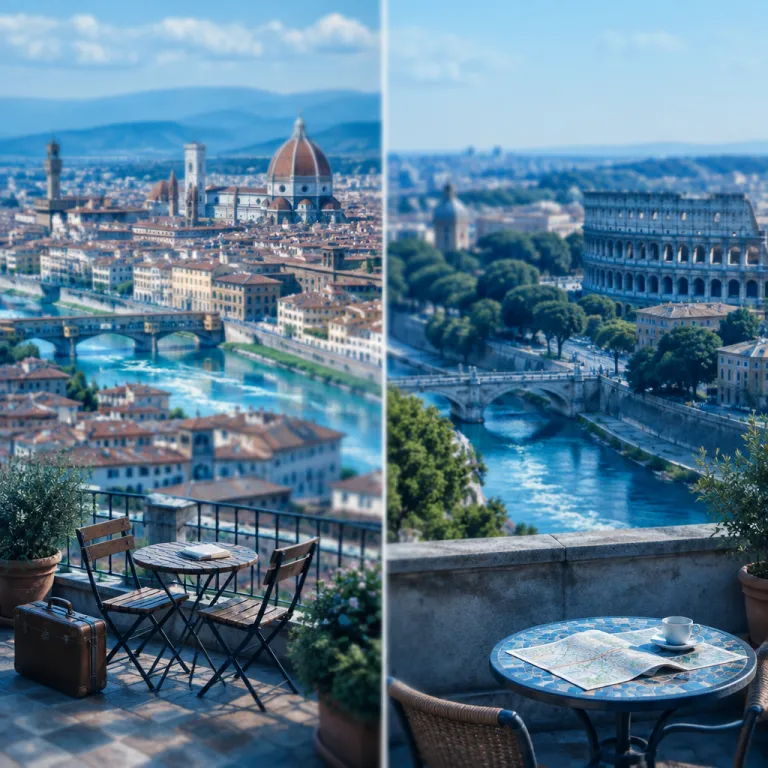
Florence vs Rome – which city to visit for a hotel stay around the Duomo and historic center
Choosing between Florence and Rome for a stay in Italy is never simple. When you weigh Florence vs Rome which to visit, the decision shapes every day of your trip and the kind of city memories you bring home. If you plan to book a hotel near the Duomo or in the historic city center, the neighborhood character in each city will influence which place feels right.
Florence offers a compact city center where you can walk from the Duomo to the Arno River in less than a day. Rome stretches across hills and districts, so a stay near the Pantheon or the Roman Forum means more time on foot and by metro, yet it rewards you with layers of history at every turn. When travelers ask “Rome which area or Florence which quarter is better for a first visit?” the answer depends on whether you prefer an intimate Renaissance city or a grand imperial capital.
For many guests, the question “Florence better or Rome better for a short week in Italy?” comes down to pace. Florence wins if you want a slower rhythm, where every day trip starts from a quiet piazza and ends with views from Piazzale Michelangelo. Rome wins if you want a city that never really sleeps, where a late night walk from the Trevi Fountain to the Colosseum feels like a film set and every hour offers new things to see.
Atmosphere, views, and first impressions when you arrive in each city
Your first day in Italy often sets the tone for the entire trip. Arriving in Florence by train from Rome or from Paris via Rome, you step out into a city center that feels immediately walkable and human in scale. The short distance from Santa Maria Novella station to the Duomo means that within minutes you will be surrounded by Renaissance façades and the sound of church bells rather than traffic.
Rome, by contrast, greets you with a sense of scale that some travelers love and others find overwhelming. Termini station is a transport hub where trains from Florence, Milan, Naples, and international routes like Paris–Rome converge, and from there the city opens in every direction. If you stay near the Roman Forum or the Colosseum, your first walk may pass ancient ruins, busy avenues, and grand piazzas in the space of a few days of exploration.
When you compare Florence vs Rome which to visit for iconic viewpoints, Florence wins for concentrated beauty. A sunset walk up to Piazzale Michelangelo gives you a sweeping view of the Duomo, the Ponte Vecchio, and the compact city center in one frame, which is ideal if you have limited time. Rome offers multiple top vantage points instead, from the Gianicolo Hill to the Vittoriano terrace, so you may need more days in the city to experience them all.
Staying near Florence’s Duomo vs Rome’s historic core
For travelers focused on where to sleep, the comparison of Florence vs Rome which to visit often becomes a comparison of two very specific areas. In Florence, staying near the Duomo places you in the heart of the historic city center, where most major sights sit within a radius of roughly one kilometer. This makes it easy to return to your room during the day, whether for a midday rest, a quick change before dinner, or a pause between museum visits.
Rome’s equivalent historic core stretches from Piazza Navona and the Pantheon to the Roman Forum and the Colosseum, and this area covers a much larger part of the city. A hotel near the Forum offers dramatic views of antiquity, yet you may need more time to reach the Vatican or Trastevere, especially on a busy day. When you plan a week in Italy Rome can feel like several cities in one, while Florence feels like a single, finely detailed quarter.
If you are leaning toward Florence and want specific guidance, resources that highlight the best hotels in Florence city center near the Duomo can help you match your stay to your travel style. Guests who value quiet evenings often choose streets just behind the cathedral, such as those around Via del Proconsolo or Borgo degli Albizi, where traffic is limited and most things close earlier than in Rome. Travelers who prefer nightlife may still find Florence better than expected, especially around Santa Croce and the Oltrarno, yet Rome will always offer more late night options.
Food, markets, and how cuisine shapes where you stay
Food is often the deciding factor when people weigh Florence vs Rome which to visit for a short trip. Florence offers a focused Tuscan culinary identity, where dishes like bistecca alla fiorentina, ribollita, and lampredotto define the city’s traditional food culture. Staying near the Duomo or San Lorenzo market means you can walk to trattorias, wine bars, and food halls in minutes, turning every day into a gentle tour of local flavors.
Rome, on the other hand, presents a broader spectrum of regional Italian food alongside its own classics such as cacio e pepe, carbonara, and carciofi alla giudia. A stay near Campo de’ Fiori or Trastevere places you close to both markets and late night dining, which suits travelers who want long evenings and more varied restaurant choices. If you plan a week Italy itinerary that includes both cities, many guests start in Rome for its energetic food scene and then move to Florence for a calmer, more intimate finale.
Where you sleep also shapes how you eat during the day trips you plan from each city. From Florence, day trips to Chianti, Siena, or Pisa focus on wine, countryside trattorias, and small town markets, and many travelers say these trips from Florence feel like an extension of the city’s own food culture. From Rome, a day trip to Frascati or the Castelli Romani offers rustic cuisine and local wine, yet the contrast with the capital’s urban intensity is sharper, which some guests love and others find tiring.
Transport, day trips, and how much time you really need
Transport logistics often tip the balance in the Florence vs Rome which to visit debate, especially if you are planning a short week Italy itinerary. High speed trains connect Florence and Rome in around 1 hour 30 minutes, according to typical Frecciarossa and Italo schedules, which makes a combined Florence–Rome or Rome–Florence trip entirely realistic even for a limited number of days. Many travelers choose to fly into one city, travel by train to the other, and then fly out, turning a single trip into a two city experience.
From Florence, day trips by train to Pisa, Lucca, Bologna, and even Venice are straightforward, and the compact size of the city center means you can reach Santa Maria Novella station on foot from most Duomo area hotels. This makes Florence better for travelers who like to start a day trip early, return by late afternoon, and still have time for an evening stroll along the Ponte Vecchio. From Rome, day trips to Tivoli, Orvieto, or Naples require more time on trains or buses, yet they reward you with grand villas, archaeological sites, and coastal views.
When deciding how many days to allocate, consider your energy levels as much as your wish list of things to see. A three day stay in Florence usually allows you to visit Florence’s main museums, climb the Duomo or Giotto’s bell tower, walk to Piazzale Michelangelo, and still enjoy slow meals. Rome often needs at least four days if you want to visit Rome’s Vatican Museums, the Roman Forum, the Colosseum, and several neighborhoods without feeling rushed.
Art, history, and the character of each historic center
Art lovers often frame the question of Florence vs Rome which to visit around specific masterpieces. Florence concentrates Renaissance art in a small area, with the Uffizi Gallery, the Accademia, and Santa Maria Novella all within easy walking distance of most Duomo area hotels. This density means that even a short stay in the city will expose you to works by Botticelli, Michelangelo, and Leonardo without long commutes.
Rome, by contrast, layers antiquity, Baroque art, and modern life in a way that can feel almost theatrical. Staying near the Roman Forum places you within sight of ancient temples, while a short walk leads to Baroque churches filled with Caravaggio paintings and piazzas framed by fountains. If you have several days, the city rewards slow exploration, yet some travelers feel that Florence wins for clarity and coherence, especially on a first trip to Italy.
Photography focused guests often ask which city offers more iconic backdrops within walking distance of their hotel. Florence’s compact center means that the Duomo, the Ponte Vecchio, and viewpoints like Piazzale Michelangelo can all be reached in a single day, and guides to the most Instagrammable spots in Florence help you plan your route. Rome offers more varied scenes, from the Colosseum to Trastevere’s lanes, yet you will spend more time crossing the city between them.
How your hotel choice shapes your overall Italy trip
Where you sleep each night quietly shapes how you remember your time in Italy long after you return home. A stay in Florence’s historic city center near the Duomo offers a sense of continuity, where every day begins and ends among the same stone façades and narrow streets. Many travelers who visited years ago say that walking out of a Florence hotel into the early morning light remains one of their top travel memories.
Rome offers a different rhythm, especially if you stay near the Roman Forum or in the Monti district. Mornings may start with views of ancient ruins, while evenings end in lively piazzas, and the contrast between quiet hotel rooms and the city’s energy can feel exhilarating. For some guests, this intensity makes Rome better as the first stop on a longer Italy Rome and Florence itinerary, with Florence providing a calmer final chapter.
When planning, use practical travel tips to align your hotel choice with your priorities rather than with abstract rankings of which city is best. If food is central to your trip, guides on how Florence food tours influence where you stay can help you choose streets that keep you close to markets and trattorias. If you care most about views, proximity to the Ponte Vecchio, the Arno, or Rome’s major monuments will matter more than the exact star rating of your hotel.
Key figures and practical statistics for choosing between Florence and Rome
- High speed trains between Florence and Rome typically take around 1 hour 30 minutes, making a combined Florence–Rome or Rome–Florence itinerary feasible even for a short week in Italy, based on sample Frecciarossa and Italo timetables.
- Florence’s historic center covers only a few square kilometers, while Rome’s central urban area extends over hundreds of square kilometers, according to summaries from the Italian National Institute of Statistics, which explains why Florence feels more walkable.
- Annual visitor numbers reach many millions for both Florence and Rome, according to regional tourism boards, which affects crowd levels around the Duomo, the Ponte Vecchio, and the Roman Forum during peak seasons.
- Peak hotel rates in both cities can be significantly higher during major holidays and spring and autumn high seasons, based on analyses from international hotel benchmarking firms, so booking early is essential if you want the best time and price combination.
- Walking from Florence’s Duomo to Piazzale Michelangelo usually takes around 25 to 35 minutes, while walking from Rome’s Colosseum to the Vatican Museums often takes more than 45 minutes, according to common mapping tools, which highlights the difference in city scale.
| City | Best for | Ideal stay | Historic center feel |
|---|---|---|---|
| Florence | Walkability, Renaissance art, calmer evenings | 3 days | Compact, easy to cross on foot |
| Rome | Ancient sites, nightlife, varied neighborhoods | 4 days | Large, diverse, more time on transport |
FAQ
Is Florence or Rome better for a first visit to Italy?
For a first visit, Florence is often better if you prefer a compact, walkable city center where most landmarks sit close to your hotel. Rome suits travelers who want a larger city with more varied neighborhoods, nightlife, and ancient sites like the Roman Forum and the Colosseum. Many guests combine both, starting in Rome for its energy and ending in Florence for a calmer final few days.
How many days should I spend in Florence vs Rome?
A typical split for a week in Italy is three days in Florence and four days in Rome, which allows time for at least one day trip from each city. In Florence, three days usually cover the Duomo, the Uffizi, the Accademia, the Ponte Vecchio, and a sunset at Piazzale Michelangelo. In Rome, four days let you visit the Vatican Museums, the Roman Forum, the Colosseum, and several neighborhoods without rushing.
Is it easy to travel by train between Florence and Rome?
High speed trains connect Florence and Rome frequently throughout the day, and the journey usually takes around 1 hour 30 minutes. Both Santa Maria Novella station in Florence and Termini station in Rome sit close to their respective city centers, so you can reach many hotels by taxi or on foot. Booking tickets in advance often secures better fares and seat choices, especially during busy seasons.
Which city is better for food, Florence or Rome?
Florence excels in Tuscan cuisine, with specialties like bistecca alla fiorentina, ribollita, and local wines easily found near the Duomo and in the historic center. Rome offers a wider variety of regional Italian dishes alongside its own classics such as carbonara and cacio e pepe, especially in areas like Trastevere and Testaccio. If food is central to your trip, many travelers enjoy starting in Rome for variety and finishing in Florence for a more focused, intimate dining scene.
Where should I stay in Florence to be close to the main sights?
For easy access to major landmarks, staying in Florence’s historic city center near the Duomo is ideal. From this area you can walk to the Uffizi, the Accademia, the Ponte Vecchio, and Santa Maria Novella station within minutes, which simplifies both sightseeing and day trips. Guests who prefer quieter evenings often choose streets just behind the cathedral or across the river in the Oltrarno, where the atmosphere feels more residential.