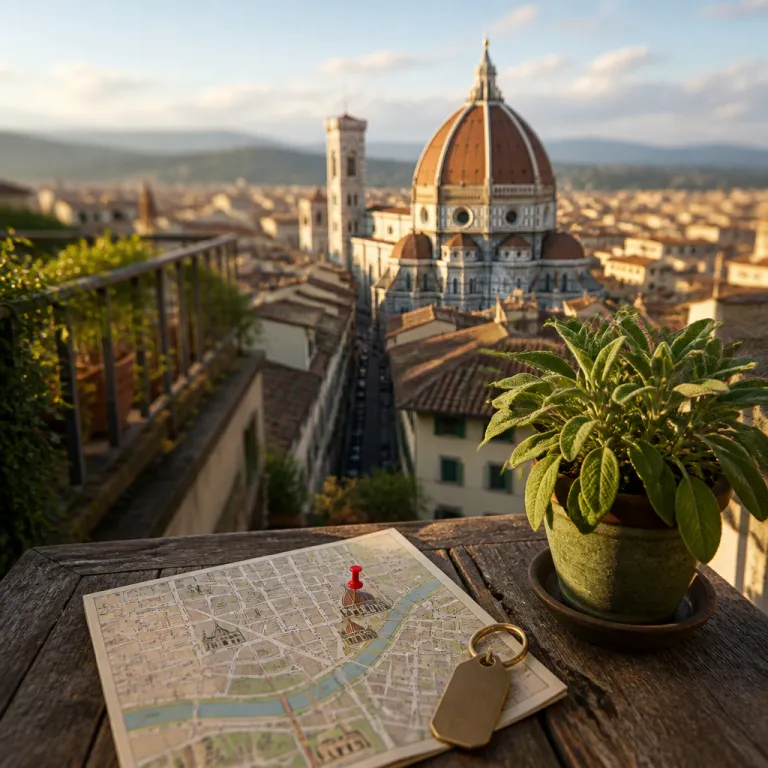
Why a florence italy attractions map matters when you book near the Duomo
Staying near the Duomo places you at the heart of Florence, within a compact city centre where almost every landmark sits within a 1 kilometre radius. A carefully read florence italy attractions map or official city plan helps you understand how Florence Cathedral, the Uffizi Gallery, Palazzo Vecchio and the Arno river align, so you can choose a hotel that matches your walking habits and sightseeing style. When you study any detailed Florence city map before you reserve, you immediately see how close your preferred church, museum or piazza is to your potential front door.
Many first time Florence tourists underestimate how dense the attractions are around the Duomo, because the city looks larger on a generic tourist map than it feels underfoot. A precise attractions map that focuses on the historic centre shows that the distance from the Duomo to Piazza della Signoria is roughly 300 metres, from there to Ponte Vecchio about 400 metres, and then across to Pitti Palace around 500 metres, based on measurements from standard mapping tools. With this mental map Florence becomes a walkable open air gallery, and you can confidently select a room based on real walking times rather than vague descriptions like “steps from the sights”.
When you compare hotels, always keep a second tab open with a high resolution map Florence centred on the cathedral dome, because this is the fixed point around which your days will revolve. Mark the locations of Santa Maria Novella, Santa Croce, San Lorenzo and San Marco, then layer in the Uffizi Gallery, Palazzo Vecchio and the main shopping streets to see how your preferred address aligns. This habit turns you from a generic Florence tourist into a guest who uses the city as locals do, navigating confidently between art, food and quiet corners.
Reading the historic centre: from florence cathedral to the Arno
Start every planning session by placing Florence Cathedral, often simply called the Duomo, at the centre of your florence italy attractions map or interactive city guide. From this church, whose dome dominates the city skyline, you can trace short walking routes to almost every major museum, piazza and palazzo that you will want to visit. When a hotel claims to be “near the Duomo”, check the Florence map and confirm whether that means 150 metres on a quiet lane or 700 metres across busy streets filled with tourist groups.
Look north of the Duomo on your attractions map and you will find San Lorenzo, with its market and Medici chapels, then a little further San Marco with its monastery museum and quieter streets. To the west the map Florence will show you Santa Maria Novella, both the church and the railway station, which matters if you plan day trips by train to other parts of Italy. Southwards, the city narrows towards Piazza della Signoria, Palazzo Vecchio and the Uffizi Gallery, before opening onto the river and the arches of Ponte Vecchio.
When you examine this compact grid, pay attention to how many times you will cross the same piazza or street each day, because this affects the atmosphere you experience when you step out of your hotel. A room just behind the Duomo offers instant access to Florence Cathedral and the Baptistery, but you may share your doorstep with constant tourist foot traffic and guided groups. A location between Santa Croce and San Lorenzo, still central on any tourist map, can feel calmer while keeping you within a 10 minute walk of almost every major attraction.
Choosing your Duomo area hotel by walking radius to key attractions
Once you understand the layout of the city, use your florence italy attractions map or printed city plan to define a personal walking radius from your preferred hotel location. Many travellers feel comfortable with a 500 metre radius, which in Florence usually covers at least one major museum, one important church and a lively piazza for evening aperitivo. On your Florence map draw this circle around each candidate address and see whether it includes the Duomo, Piazza della Signoria, the Uffizi Gallery or Ponte Vecchio.
If you are an art focused Florence tourist, prioritise proximity to the Uffizi Gallery, Palazzo Vecchio and the Accademia Gallery, where Michelangelo’s David stands, even if that means being slightly further from Santa Maria Novella station. A guest more interested in churches might instead choose a position equidistant between Santa Croce, Santa Maria Novella, San Lorenzo and San Marco, using the attractions map to ensure none of these lie more than 10 to 12 minutes away on foot. Families often prefer to stay near a spacious piazza such as Piazza della Signoria or the square in front of Santa Croce, where children can move more freely after museum visits.
To visualise this, imagine placing a 500 metre circle on your tourist map with the Duomo at the centre: hotels just north of the cathedral, for example around Via dei Servi or Via de’ Cerretani, keep Florence Cathedral, the Baptistery, the Uffizi and Ponte Vecchio all within roughly a 6 to 8 minute stroll for an average visitor. Remember that Florence streets are mostly stone and can feel uneven, so the difference between 300 and 800 metres on your tourist map becomes very real after a full day of sightseeing.
Aligning your hotel choice with art, Medici history and river life
Florence is the cradle of the Renaissance, and your florence italy attractions map is also a map of art history, especially around the Duomo and the Arno. Guests fascinated by Michelangelo, Botticelli and the Medici family should look for hotels that sit within a short stroll of the Uffizi Gallery, Palazzo Vecchio and the Medici chapels at San Lorenzo. When you plot these on a Florence map, you will notice a triangle of streets between Piazza della Signoria, the Duomo and the river that offers exceptional access to both art and daily city life.
For travellers drawn to Medici power and politics, position your stay near Palazzo Vecchio, the former seat of government, and follow your attractions map across the river to Pitti Palace, the later Medici residence. This route takes you over Ponte Vecchio, where goldsmiths still work in tiny shops, and into the Oltrarno district with its artisan workshops and quieter piazzas. If you choose a hotel on the north bank but close to the bridge, your daily walk to Pitti Palace becomes a highlight rather than a chore, especially in the soft evening light.
Art lovers who want to balance galleries with open air spaces should use the tourist map to combine visits to the Uffizi Gallery and the riverside with pauses in Piazza della Signoria and the loggias around Palazzo Vecchio. Mark Santa Croce on your map Florence as well, because this church holds the tombs of Michelangelo and other cultural figures, and sits in a broad square that feels less crowded than the Duomo area. By aligning your hotel with these routes, you transform simple transfers between attractions into curated walks through Florence’s layered history.
Balancing serenity and spectacle around the Duomo and main piazzas
The area immediately around Florence Cathedral and Piazza della Signoria offers unmatched spectacle, but your florence italy attractions map will reveal that serenity often lies just a few streets away. When you zoom in on the Florence map, look for narrow lanes behind the Duomo, around San Lorenzo or between Santa Maria Novella and the river, where traffic is limited and evening noise softens. Hotels on these side streets still keep you within a 5 minute walk of major tourist attractions while offering a more residential atmosphere.
Use your attractions map to identify where large tour groups tend to gather, usually in front of the Duomo, at the corner of the Uffizi Gallery and along the main approach to Ponte Vecchio. Then check how many of these high traffic points sit within 50 metres of your potential hotel entrance, because this affects both sound levels and the ease of moving luggage on arrival. A location slightly offset towards Santa Croce, Santa Maria Novella or San Marco can provide a calmer base while remaining central on any tourist map of Florence Italy.
Evening ambience matters as much as daytime convenience, so consider how the piazza nearest your hotel behaves after dark, which you can often infer from its role on the city map. Piazza della Signoria and the square by Santa Croce stay lively with restaurants and street performers, while some streets near San Lorenzo quieten once the market closes. Choosing a hotel that faces a smaller church or side piazza rather than a main thoroughfare can give you restful nights without sacrificing quick access to the Duomo and other attractions.
Practical map based strategies for an efficient Florence stay
To make the most of your stay, treat your florence italy attractions map as a planning tool rather than a simple reference. Before you book, sketch two or three likely sightseeing days, placing museums such as the Uffizi Gallery, the Accademia and any smaller museum near San Marco or Santa Maria Novella on specific mornings. Then use the Florence map to cluster nearby churches, palaces and piazzas around each anchor visit, reducing backtracking and saving energy.
Local guides and the Florence Tourism Board often recommend structuring days by neighbourhood, and the dataset confirms a simple pattern : “Morning: Museums, Afternoon: Churches, Evening: Piazzas”. If you follow this rhythm, choose a hotel that sits between your preferred morning museum zone, perhaps near the Uffizi or Palazzo Vecchio, and your favourite evening piazza, maybe Santa Croce or Piazza della Signoria. This way your daily routes form gentle loops on the tourist map, always bringing you back to the Duomo area without long detours.
As a concrete example itinerary, imagine a day that starts at the Duomo, continues to the Uffizi Gallery and ends at Ponte Vecchio and Pitti Palace: the walk from Florence Cathedral to Piazza della Signoria is about 300 metres, from there to the Uffizi roughly 200 metres, then another 400 metres to Ponte Vecchio and around 500 metres more to Pitti Palace, distances that translate into short 5 to 10 minute segments at a relaxed pace. When you secure timed entries for the Uffizi Gallery, Florence Cathedral dome or Pitti Palace, mark those slots clearly on your map Florence so you can plan relaxed walks between each commitment.
Key figures to guide your Florence hotel planning
- Florence welcomed around 10 million visitors in 2019 according to municipal tourism statistics compiled by the Florence Tourism Board and Comune di Firenze, which means central streets around the Duomo, Piazza della Signoria and the Uffizi Gallery can feel crowded at peak times.
- The historic centre is compact, with many major attractions such as Florence Cathedral, Palazzo Vecchio and Santa Croce located within roughly 1 kilometre of each other, a figure confirmed by measurements on standard city maps, so a central hotel often removes the need for public transport.
- Walking times between key sights are short, with routes like Duomo to Uffizi Gallery or Uffizi to Ponte Vecchio typically taking 5 to 10 minutes at a relaxed pace for most tourists, based on average walking speeds of 4 to 5 kilometres per hour.
- Florence’s main railway station, Santa Maria Novella, sits less than 800 metres from the Duomo, which makes hotels between the station and the cathedral convenient for both arrivals and day trips by train.
FAQ about using a florence italy attractions map for hotel choices
What are the must see attractions near the Duomo for hotel guests
Within a short walk of most Duomo area hotels you will find Florence Cathedral and its dome, the Baptistery, the Uffizi Gallery, Palazzo Vecchio and Ponte Vecchio. These landmarks, together with Santa Croce and Santa Maria Novella, form the core of any florence italy attractions map focused on the historic centre. Choosing accommodation within this compact zone allows you to visit several major sites in a single day without long transfers.
Is it necessary to book museum tickets in advance when staying centrally
Advance booking is strongly recommended for headline museums such as the Uffizi Gallery, the Accademia Gallery and timed climbs of the Duomo dome or bell tower. Even if your hotel is only a few minutes away on the Florence map, same day queues can be long during busy seasons. Securing tickets before arrival lets you structure your attractions map around fixed time slots and enjoy flexible breaks back at your room.
What is the best time to visit Florence for a Duomo area stay
Spring and autumn usually offer the most pleasant balance of weather and crowd levels for guests staying near the Duomo and main piazzas. During these periods, walking routes between Florence Cathedral, Piazza della Signoria, Santa Croce and Pitti Palace feel comfortable throughout the day. Your florence italy attractions map becomes easier to navigate when temperatures are mild and streets are less congested.
How can I use a tourist map to avoid crowds while remaining central
Use your tourist map to identify alternative streets that run parallel to the busiest routes between the Duomo, the Uffizi and Ponte Vecchio. Staying one or two blocks away from main arteries often gives you quieter access to the same attractions. When booking, look for hotels on side streets near Santa Croce, San Lorenzo or Santa Maria Novella, which remain central on the Florence map but slightly removed from peak foot traffic.
Are walking tours useful if my hotel is already close to the attractions
Guided walking tours can still add value even when you stay beside the main sights, because local guides help you interpret what you see on your florence italy attractions map. Many tours start near the Duomo or Piazza della Signoria, making them easy to join from central hotels. After a tour, you can revisit favourite churches, palaces and galleries at your own pace using the Florence map with greater confidence.
References
- Florence Tourism Board (pre-pandemic visitor statistics, 2019)
- Ministero della Cultura (Italy)
- Comune di Firenze, Ufficio Turismo